

Ryobi Group Basic Sustainability Policy
Reflecting its corporate philosophy of “Create a Sound and Dynamic Corporation through Technology, Trust and Challenge,” the Ryobi Group considers fulfilling its social responsibility to ensure sustainable value and help realize a sustainable society to be fundamental to management.
Accordingly, we strive to solve social issues through our business activities, aiming not just to be an economic entity pursuing profit through fair competition but also to retain the trust of society as a whole.
The Ryobi Group works to ensure a sound and dynamic corporate culture and further strengthen governance and will continue creating a sustainable and abundant future while fostering greater trust with stakeholders.
Priority Areas for the Ryobi Group
- Environment:
Concern for the global environment - Social:
Coexistence with local communities; contributions to society through business activities; strengthening customer trust; coexistence and mutual prosperity with suppliers and responsible procurement activities; respect for human rights; promotion of occupational safety and health; and the creation of vibrant workplace environments - Governance:
Compliance with laws, regulations, and ethical standards; risk management; and proactive disclosure of corporate information
Materiality
Ryobi has revised its materiality (key issues) in 2024 to realize its vision for 2035, setting metrics and action plans under the medium-term management plan (2025–2027). Through continuous evaluation and monitoring of progress, we aim to accomplish these initiatives.
| Societal change | Materiality |
|---|---|
| Increased awareness of the global environment | Supporting weight reduction and electrification of automobiles |
| Responding to climate change | |
| Reducing the environmental impact | |
| Demographic changes | Advancing diversity |
| Human resource development | |
| Creating a comfortable work environment | |
| Accelerated digitalization of society | Utilizing digital technologies (ICT/AI) |
| Increased societal demand for honest and responsible corporate management | Strengthening corporate governance |
| Strengthening compliance efforts | |
| Respect for human rights |
Initiatives for Priority Areas
Environment(E)

Environmental Protection
The Ryobi Group believes that an important management issue is protecting the environment and reducing the environmental impact of business activities. The Ryobi Group established the Ryobi Environmental Preservation Committee with the purpose of reducing the environmental impact of its business activities and contributing to the development of regional communities.
Social(S)

Social Contribution
The Ryobi Group is actively working to give back to the community with the aim of realizing a truly affluent society.

Fair Transactions
Building sound and favorable relationships with suppliers is one of action principles all Ryobi Group members must uphold.
Together with Employees
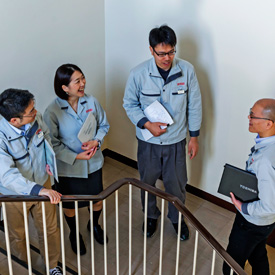
We are working to utilize diverse human resources, foster an environment where everyone can achieve their full potential, and create workplaces where everyone can perform their duties safely, healthily, and enthusiastically.

Respect for Human Rights
The Ryobi Group recognizes respect for the human rights of all people as an important management issue in every aspect of its business activities.
Ryobi Group Human Rights Policy< PDF 242KB >
Human Resource Development
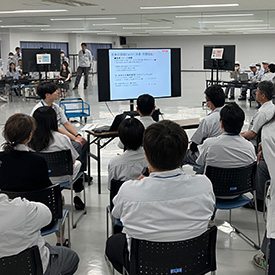
We enhanced our digital education and in-house certification system for all employees to develop the digital talent needed to achieve the DX of the manufacturing industry.
Governance(G)

Corporate Governance
The Ryobi Group considers the establishment and maintenance of appropriate corporate governance crucial for its growth and development as it fulfills its social responsibility.

Compliance
To be widely trusted by society, we must maintain a corporate structure in which corporate activities are conducted equitably, ethically, and in compliance with statutory regulations.