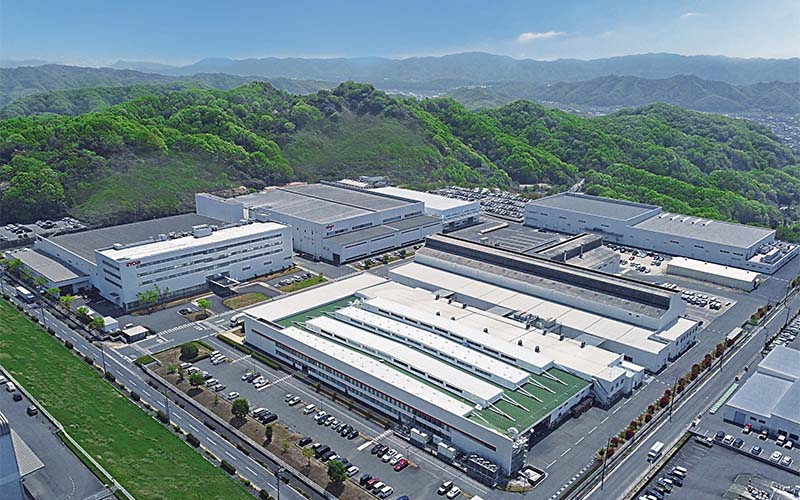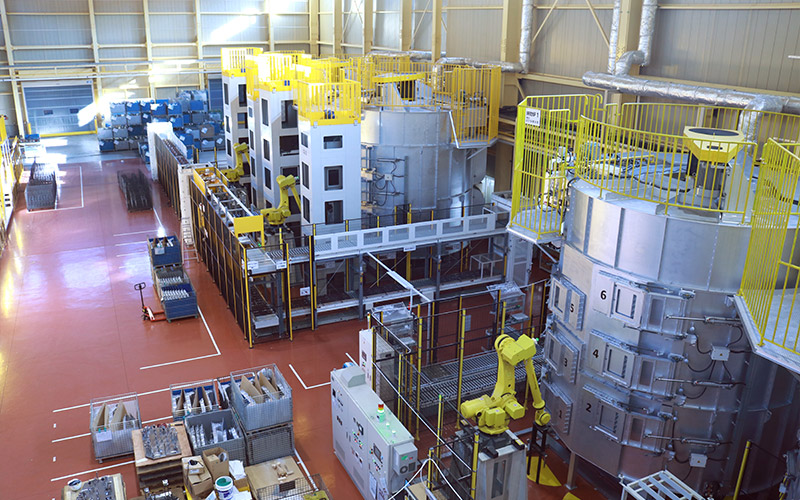
Ryobi's aluminum die casting contributes to a circular economy
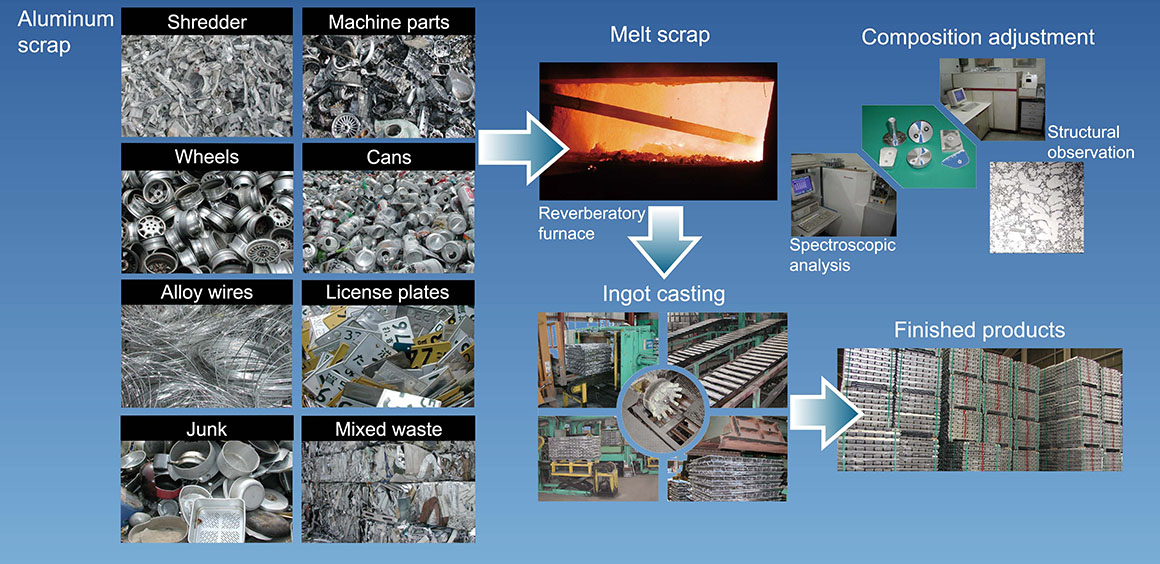
The main raw material for aluminum die casting is a recyclable secondary aluminum alloy. Aluminum die cast products used in automobiles and other vehicles are recyclable after disposal, and are reused as secondary aluminum alloys.
Aluminum's Useful Properties
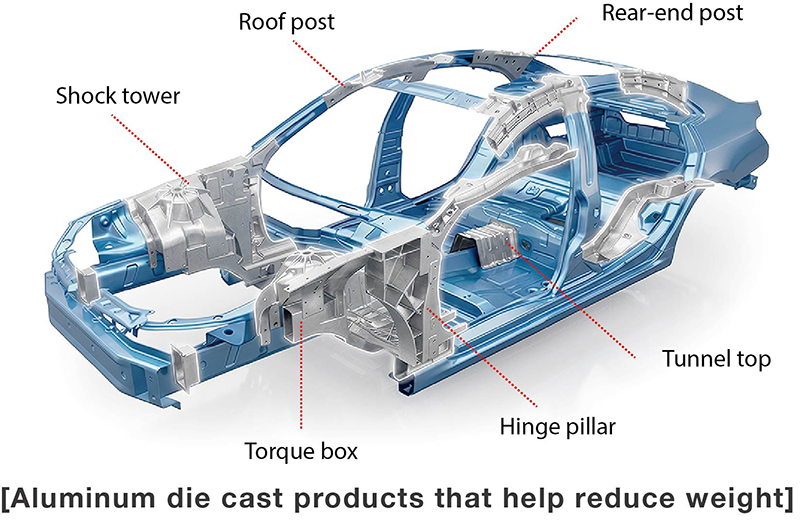
Light
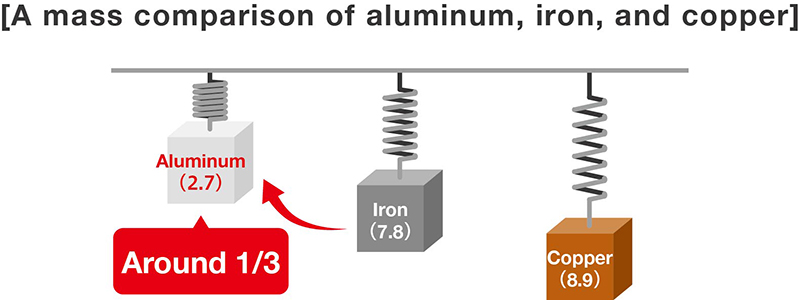
Aluminum is a very light metal with a specific gravity of 2.7, about one-third that of iron, which has a specific gravity of 7.8. In other words, if you create two objects of the same shape and volume, one out of aluminum and the other out of iron, the aluminum object will have a mass of about one-third of that of the iron object. Aluminum parts are thus lighter than iron parts of the same size and shape.
Strong
Aluminum has high specific strength (strength per unit weight) and is widely used in structural materials for transportation equipment and buildings.
Corrosion Resistant
Aluminum surfaces exposed to air form an oxide film. This film prevents corrosion, so rust inhibitors and other paints are usually not necessary.
Easy to Recycle
Aluminum has a much lower melting point than iron or copper, making it easier to recycle. Moreover, the energy required to produce secondary alloy ingots is only 3% of that required for new aluminum ingot production, despite the ingots being almost identical in quality.
Easy to Cast
Because aluminum has a low melting point, the metal flows easily, making it ideal to produce thin-walled or complexly shaped castings.
Easy Machining
Aluminum can be easily machined into various shapes because it does not return to its original configuration when deformed by force. In addition, finished products can readily be further machined in various ways, including precision surface machining.
Good Thermal Conduction
The thermal conductivity of aluminum is about three times that of iron. It conducts heat well and cools rapidly. This property makes it suitable for the heat dissipation fins and heat sinks of air conditioning and heating systems, engines components and other equipment.
Beautiful
Aluminum, which is already appealing in its bare form, becomes even more beautiful when anodic oxide coating or other surface treatments are applied. It is also possible to add color through dyeing or electrolytic coloring.
Non-Toxic and Odorless
Aluminum is non-toxic and odorless. Its widespread use in beverage cans and packaging for food, medicine and other products is due to its hygienic properties.
Accelerating toward a Circular Economy by Expanding Aluminum Die Casting Applications
Secondary aluminum alloys are the main material used in aluminum die casting. They are environmentally friendly as they are made by recycling various kinds of aluminum scrap. Secondary aluminum alloys are reborn time and again at the same quality without requiring inputs of virgin material from new mining and extraction. Due to ongoing decarbonization efforts, their use is growing, especially in the automotive industry. Ryobi itself has a secondary alloy usage rate reaching 95% and these operations span a wide variety of automotive parts. We are expanding the scope of such alloys' application to internal combustion engine (ICE) parts, including cylinder blocks and transmission cases; electric vehicle parts, including battery cases, e-Axle cases, and inverter cases; and large chassis parts, including subframes and rear underbodies.
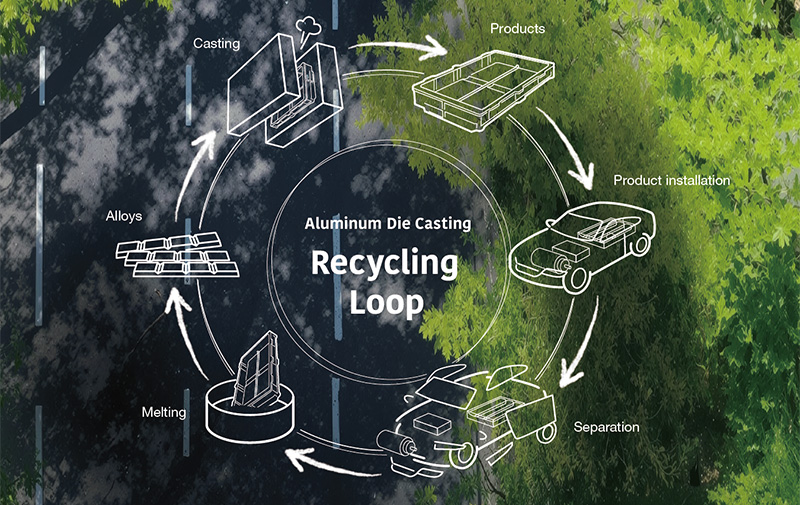
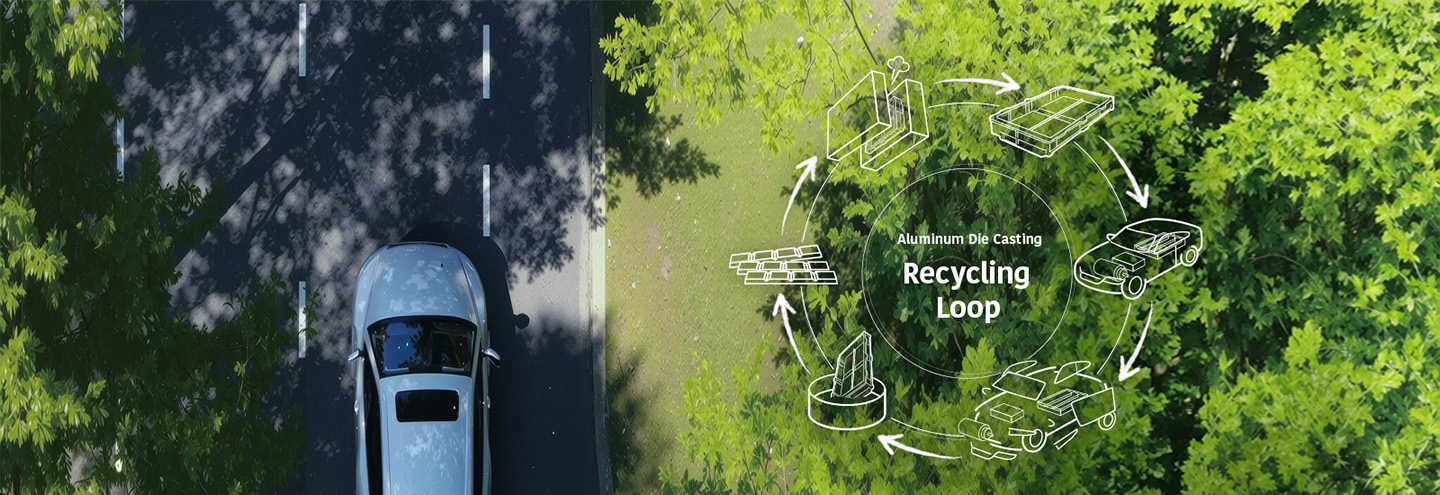
Secondary Aluminum Alloys can be Reborn Countless Times
When a vehicle is disposed of, the aluminum die cast parts installed during production are separated out and collected. The parts are then finely cut and melted along with other aluminum scrap. The composition of the metal is then adjusted and it is reborn as a secondary aluminum alloy. Quality degradation attributable to the recycling process is limited and the acceptable range of alloy composition is fairly wide, making it possible to maintain quality over repeated reuse cycles.
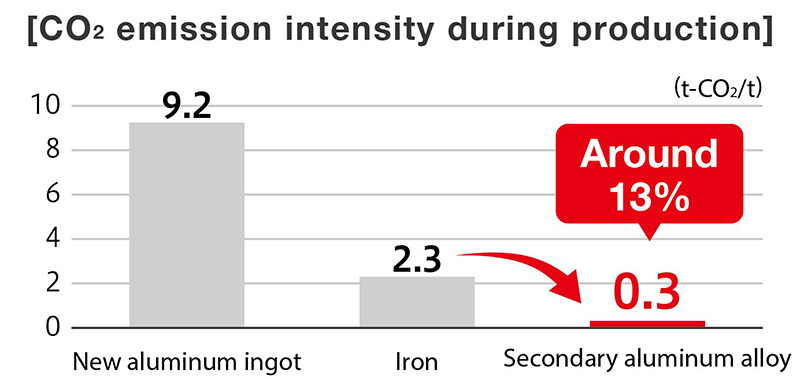
The production of secondary aluminum alloys emits just 3% of the CO2 released by the processes used to extract and refine aluminum ingots from bauxite or other ores. Furthermore, because the production of such alloys generates around 13% of the CO2 emissions released by iron production, they are garnering attention from various industries as an effective alternative that reduces environmental impacts.
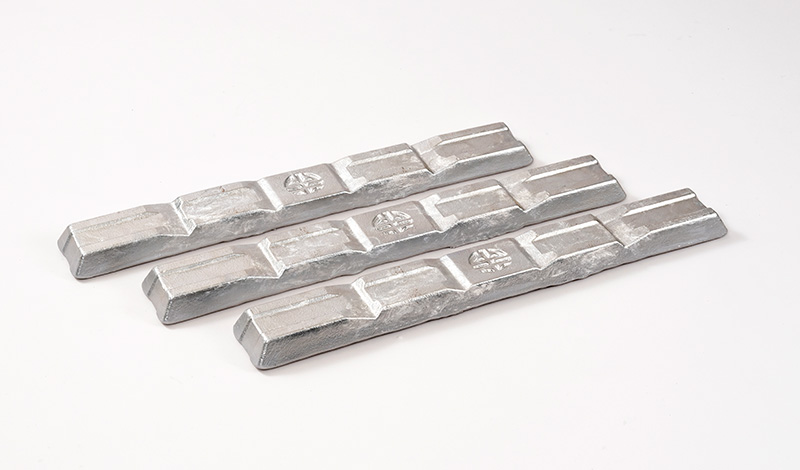
Group company Ikuno Co. manufactures secondary alloy ingots used by the Group. Secondary alloy ingots manufactured at Ikuno are transformed into top-quality die cast products at plants operated by our Group companies in Japan.
Aluminum Use Expands due to its Environmentally Friendly Nature
Aluminum is lightweight with excellent recyclability. In terms of specific gravity, aluminum, iron, and copper have values of 2.7, 7.8, and 8.9, respectively, indicating that, volume for volume, aluminum is remarkably light, with around one-third the mass. This property makes it an indispensable material in the broad field of transportation machinery encompassing automobiles, trains, and aircraft.
In addition, aluminum readily dissipates heat, with a heat transfer rate of around three times that of iron, making it a preferred material for a wide range of EV parts, including inverter cases. Moreover, thanks to a relatively low melting point compared to iron, copper, and other metals, aluminum can be considered an eco-friendly material that requires little energy for melting.
Ikuno Co.'s Hydroelectricity
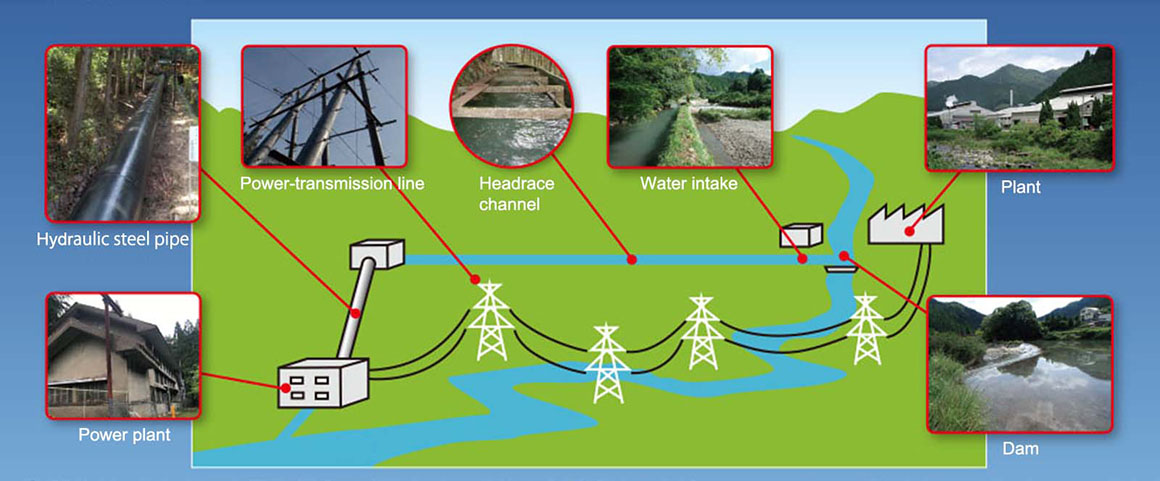
Ikuno Co., which manufactures secondary alloy ingots, uses water from a nearby river to generate 40% to 50% of the electricity it uses. Using this clean energy helps reduce CO2 emissions.
SDGs Green Loan Financing
Loan amount: ¥13 billion
Loan period: 7 years from 2020
Ryobi procures the primary source of capital expenditure for environmental performance capital expenditure for the manufacture of aluminum die cast products through the SDGs Green Loan.
In procuring the bonds, we obtained the highest rating of "GA1" in the R&I Green Bond Assessment from Rating and Investment Information, Inc. Ryobi was recognized for its introduction of facilities with high environmental performance in the manufacture of aluminum die cast products and the contribution of aluminum die cast products to weight savings and improved fuel efficiency of automobiles.